
Mulching is often presented as a simple, almost foolproof task: spread organic matter around the base of a tree and let nature take care of the rest. Yet in orchards across Britain, poorly applied mulch quietly weakens trees year after year. Roots suffocate, bark decays, and growth stalls. The result is not dramatic failure but gradual decline, which many gardeners misinterpret as poor soil, bad weather, or inferior stock when they buy fruit trees for a new project.
An experienced British orchard specialist explains that most problems arise not from neglect, but from enthusiasm combined with misunderstanding. “Mulch is one of the most powerful tools we have for establishing healthy orchards,” note the fruit trees specialists at Fruit-Trees. “However, it must be applied correctly and with an understanding of soil structure and root behaviour. Poor practice can cause more harm than good. We always advise growers to review planting guidance alongside their choice of apple trees to ensure mulching supports, rather than restricts, early root development.”
The following five mistakes are frequently observed in both private gardens and small orchards. Each one has the potential to starve a tree of oxygen, nutrients, or water, even when intentions are sound.
Mistake One: Building the Mulch Volcano Against the Trunk
The most common and damaging mulching error is the so-called “mulch volcano”. This occurs when compost, bark, or woodchip is piled directly against the trunk, forming a mound that can be several inches deep at the stem and tapering outward.
In British conditions, where rainfall is regular and humidity can be high, this practice creates a persistently damp environment around the bark. Tree trunks are not designed to remain wet. The bark at the base is adapted to exposure to air, not to prolonged contact with moist organic material. When mulch is heaped against it, oxygen levels drop and fungal organisms flourish.
Over time, the bark softens and begins to decay. This can lead to collar rot, particularly in apple trees on certain rootstocks that are sensitive to excess moisture. The decay may not be visible until the tree begins to show reduced vigour: smaller leaves, limited shoot extension, and poor fruit set.
There is another, less obvious consequence. When mulch is banked high around the trunk, roots may begin to form within the mulch layer itself rather than spreading properly into the surrounding soil. These roots are often shallow and vulnerable. In dry spells, they can desiccate quickly, leaving the tree stressed.
Correct practice is straightforward. Mulch should be applied in a broad, even ring around the tree, typically 5–10 centimetres deep, but always kept a few centimetres clear of the trunk. The base of the tree must remain exposed to air. In orchards, this simple adjustment can dramatically reduce disease incidence and improve long-term structure.
Mistake Two: Applying Mulch Too Deeply and Cutting Off Oxygen
Mulch conserves moisture and moderates soil temperature, but it must also allow the soil to breathe. Roots require oxygen as much as they require water. When mulch is laid excessively thick, particularly on heavy clay soils common across parts of England and Wales, it can seal the surface and restrict air exchange.
A layer exceeding 10–12 centimetres can compress under rainfall, especially if composed of fine compost or partially decomposed material. As it compacts, water infiltration slows and oxygen diffusion declines. The soil beneath may remain saturated for longer periods, creating anaerobic conditions.
In anaerobic soil, beneficial microorganisms struggle. Nutrient cycling slows, and the fine feeder roots responsible for nutrient uptake begin to die back. The tree effectively starves, even though organic material sits on the surface. Symptoms may include yellowing leaves, weak extension growth, and premature leaf drop.
British orchard specialists often observe that gardeners assume “more mulch equals more benefit”. In reality, the aim is balance. A moderate layer suppresses weeds and protects soil structure without suffocating it. On lighter sandy soils, slightly thicker mulch may be appropriate to conserve moisture, but even then it should be monitored and adjusted annually.
It is also important to consider timing. Applying a heavy mulch in late autumn to poorly drained soil can exacerbate winter waterlogging. In regions prone to prolonged rainfall, such as the West Country, growers may benefit from allowing soil to drain freely before renewing mulch in spring.
Mulching should enhance soil life, not seal it off. Observing how water drains after rainfall is a practical way to assess whether the layer is too deep.
Mistake Three: Using the Wrong Materials for the Soil and Setting
Not all mulch materials are equal, and not all suit every orchard. In Britain, common choices include well-rotted farmyard manure, garden compost, leaf mould, straw, and bark chippings. Each has advantages and limitations.
Fresh woodchip, for example, can temporarily immobilise nitrogen as it decomposes. Soil microorganisms use available nitrogen to break down high-carbon materials, making less immediately accessible to tree roots. When applied thickly and without supplementary nutrition, this can contribute to pale foliage and poor growth, particularly in young apple trees.
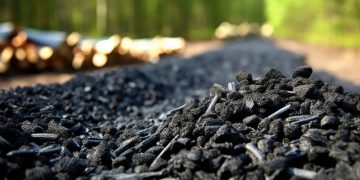
Similarly, uncomposted manure may introduce excess salts or weed seeds, while very fine compost can form a crust that impedes water penetration. In smaller gardens, decorative bark is sometimes used purely for appearance, with little thought given to its interaction with soil biology.
The orchard specialist’s perspective is practical. Choose materials that are well composted, free from contaminants, and suited to the soil type. On light soils, organic matter that improves water retention is valuable. On heavy clay, materials that encourage soil structure and worm activity are preferable.
Leaf mould, widely available in British gardens, is particularly effective for improving soil texture without overwhelming it with nutrients. Well-rotted manure, applied in moderation, can provide a steady nutrient release. The key is maturity. Mulch should be stable, partially decomposed, and unlikely to generate excessive heat or microbial competition.
Gardeners who buy fruit trees for new plantings often invest carefully in variety and rootstock selection. Equal care should be taken with the choice of mulch. The wrong material can delay establishment by a full growing season, whereas the right one promotes steady, balanced growth.
Mistake Four: Neglecting the Area Beyond the Immediate Trunk Circle
Another subtle error is confining mulch to a narrow circle immediately around the trunk, often no wider than the original planting hole. This limits its effectiveness and can concentrate root growth in a restricted zone.
Tree roots extend well beyond the canopy drip line, particularly in established specimens. Fine feeder roots occupy the top 20–30 centimetres of soil across a broad area. When mulch is applied only in a small patch, the wider root system remains exposed to weed competition and temperature fluctuations.
In orchards, specialists typically maintain a weed-free strip along the tree row, often one metre wide or more. This reduces competition for moisture and nutrients. In domestic gardens, space may be limited, but expanding the mulched area as the tree grows can significantly improve performance.
Weeds are not merely cosmetic. Grass, in particular, competes aggressively with young fruit trees. Its dense root system intercepts rainfall and absorbs available nitrogen. A thin ring of mulch surrounded by lawn offers limited protection. The tree may survive but will rarely thrive.
Extending mulch outward in a flat, even layer supports the entire feeder root network. It stabilises soil temperature, reducing stress during late spring frosts and summer heatwaves. It also encourages beneficial organisms across a broader zone.
Care must still be taken not to over-apply. The principles remain the same: moderate depth, clearance around the trunk, and appropriate material. But widening the coverage reflects how roots actually behave, rather than how the trunk appears above ground.
Mistake Five: Failing to Adjust Mulching Practices Over Time
Mulching is not a one-off task. Conditions change, trees mature, and soil structure evolves. One of the most overlooked mistakes is repeating the same mulching approach year after year without reassessment.
In the first two or three years after planting, young trees benefit from consistent moisture and reduced competition. Mulch is especially valuable at this stage. However, as trees establish deeper roots, their reliance on surface conditions decreases.
Continuously adding new layers without removing or incorporating older material can lead to an excessively thick organic horizon. Over time, this may create a distinct layer separate from the underlying mineral soil. Roots can become concentrated in this layer, remaining shallow and more vulnerable to drought.
Periodic evaluation is essential. In some cases, gently incorporating partially decomposed mulch into the soil surface can improve structure and prevent layering. In others, reducing the depth or frequency of application may be appropriate.
Climate variability also plays a role. Recent summers in parts of Britain have included extended dry periods. In such years, mulch can be invaluable for conserving moisture. Conversely, during persistently wet seasons, allowing soil to dry and breathe may take precedence over moisture retention.
The orchard specialist’s broader message is that mulching should respond to observation. Look at leaf colour, shoot growth, soil texture, and drainage patterns. Adjust accordingly. Trees are long-term investments. Small corrections in management practices can have cumulative benefits over decades.
For gardeners considering expanding their orchard or planning to buy fruit trees for autumn planting, understanding mulching as a dynamic practice rather than a fixed routine will protect that investment. Healthy soil is not created by quantity alone, but by informed application.
Mulch remains one of the most effective tools in British fruit growing. When applied with restraint and awareness, it conserves water, suppresses weeds, and supports soil life. When misapplied, it quietly starves trees of the very resources it is meant to provide. The difference lies not in the material itself, but in how it is used.